Earlier last month, Asus announced the Android Pie beta program for the ZenFone Max Pro (M2). And now, the company has extended it to include the ZenFone Max Pro (M1) as well. Zenfone Max Pro M1 users, your craving for Pie ends now! We're opening up the Android Beta Program to all those who wish to have an early taste of the Android Pie, while you wait for the official release. You may apply for the beta version by clicking here https://t.co/M2QHjSuajw pic.twitter.com/vpo5cGMD6w— ASUS India (@ASUSIndia) February 28, 2019 The ZenFone Max Pro (M1) launched last year in April with...
The Realme 3 is all set to launch on March 4. It's already confirmed to come with Helio P70 SoC and dual rear cameras and now we learn of two more items on its specs sheet. India's Flipkart has set up a landing page on its website for the Realme 3 which confirms that the smartphone will feature a waterdrop notch display and ship with a 4,230 mAh battery. The smartphone will likely be Flipkart-exclusive in the country. The Realme 3 will be the company's second smartphone after Realme U1 to be powered by Helio P70 SoC. The back of this smartphone will flaunt a diamond-cut design...
The Realme 3 is all set to launch on March 4. It's already confirmed to come with Helio P70 SoC and dual rear cameras and now we learn of two more items on its specs sheet. India's Flipkart has set up a landing page on its website for the Realme 3 which confirms that the smartphone will feature a waterdrop notch display and ship with a 4,230 mAh battery. The smartphone will likely be Flipkart-exclusive in the country. The Realme 3 will be the company's second smartphone after Realme U1 to be powered by Helio P70 SoC. The back of this smartphone will flaunt a diamond-cut design...
The Realme 3 is all set to launch on March 4. It's already confirmed to come with Helio P70 SoC and dual rear cameras and now we learn of two more items on its specs sheet. India's Flipkart has set up a landing page on its website for the Realme 3 which confirms that the smartphone will feature a waterdrop notch display and ship with a 4,230 mAh battery. The smartphone will likely be Flipkart-exclusive in the country. The Realme 3 will be the company's second smartphone after Realme U1 to be powered by Helio P70 SoC. The back of this smartphone will flaunt a diamond-cut design...
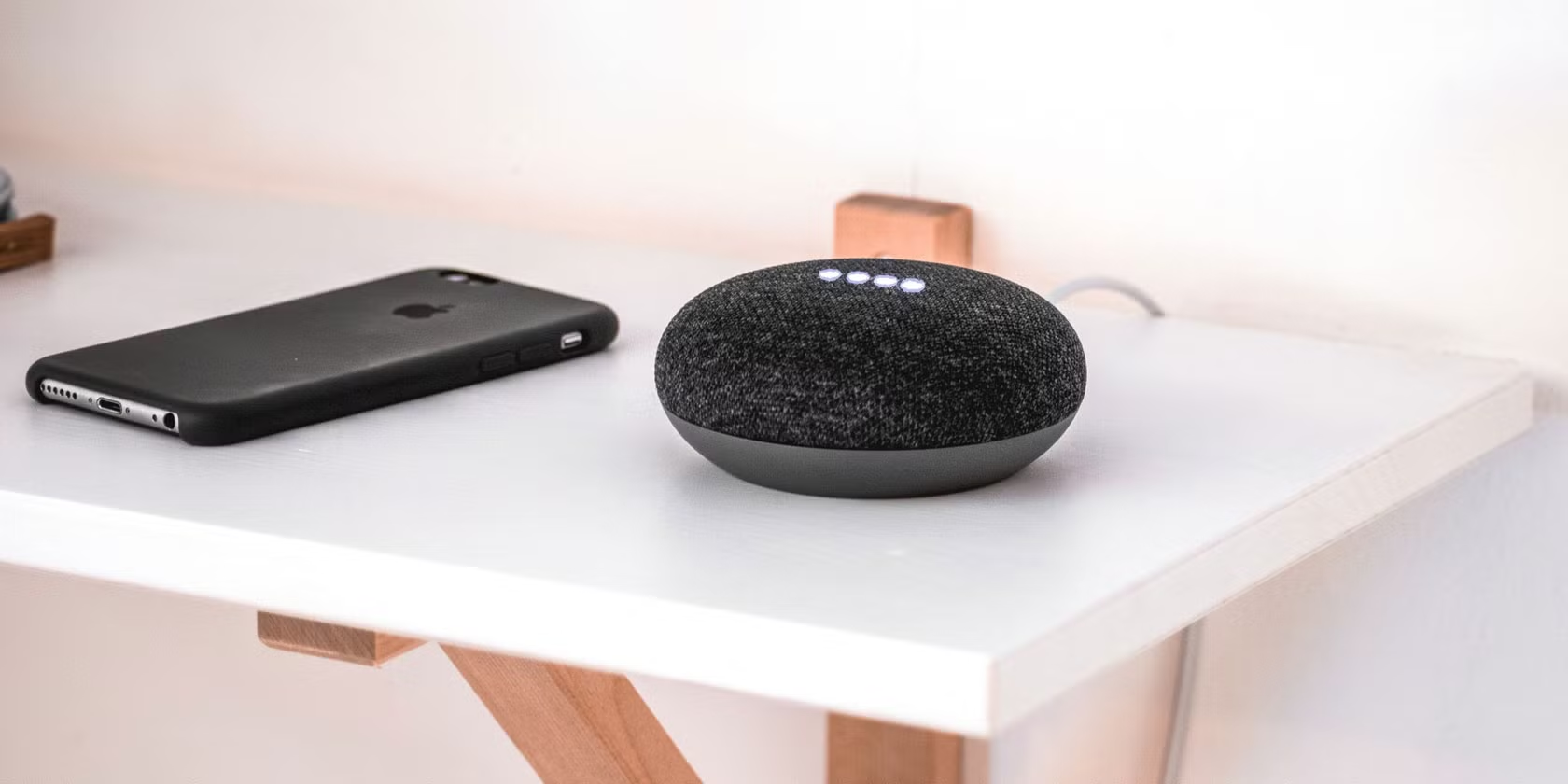
While the Internet of Things can bring a lot of convenience for you, it can also make it easier for hackers to gain access to your devices. As such, it’s vital to ensure the gadgets you bring into your home are secure before they’re even turned on.
Let’s look at some ways you can stay safe with smart gadgets.
What’s the Problem With Smart Home Gadgets?
The main appeal with “smart gadgets” is that they utilize a network in order to achieve their goals. This is what makes them “smart” in the first place. Unlike “dumb” gadgets, smart ones can communicate with other devices and the internet to achieve a specific goal.
This added functionality, however, can also be used against you. While smart gadgets can now talk to each other, hackers can use this channel of communications to talk to your devices.
This opens up Internet of Things (IoT) devices to a world of cybercrime, where hackers have access to devices they previously could not touch.
What Can Compromised Smart Home Gadgets Do?
So your smart devices are susceptible to hackers. So what? What are they going to do when they get into your smart watch—see how many steps you took today? Give you advice on how you can train better?
Things get a little scarier when you realize what these gadgets are capable of. For example, does your smart watch use GPS to track your progress when you go jogging?
Should a hacker get access to that data, they can see what’s being sent and monitor where you are at all times. They can use the data to stalk you, or to monitor when you’re out to stage a burglary.
This may sound like paranoid rambling, but it’s very much a reality! WeLiveSecurity reported on a children’s smart watch that was recalled after the first wave of models sent data unencrypted. This allowed hackers to monitor where the child was at any given time, which was grounds to recall the product over privacy concerns.
How to Secure Your Internet of Things Devices
Every time you go to buy a new gadget for your home, ask yourself these six things to ensure you can keep your privacy safe.
1. “How Easy Is It to Hack This?”
The term “Internet of Things” is a little vague. Most of the time, it describes a device that connects to the internet. That’s why it’s the “Internet of Things;” it’s many “things” that are connected to the internet as a whole.
Sometimes, however, people use the term to describe a device that just connects to another gadget without using the internet. How easy it is to crack into a device depends on whether it actually accesses the internet or not.
It’s a good idea to consider how easy it would be for a hacker to get into the device. Something that connects to the internet has a far greater chance of being breached than something that only connects to an app.
The Mirai botnet, for example, scanned for open IoT gadget ports on the internet. This meant that devices that used an internet connection were susceptible to being scanned and invaded. Any devices that worked offline, however, had an easier time avoiding Mirai’s attacks.
That’s not to say that any device that doesn’t connect to the internet is impenetrable. It does, however, mean that only people in the device’s range can access it. This restricts a potential hacker’s range to a few feet around the device. It’s a lot easier to catch a hacker standing in your front garden than one in another country!
2. “If This Was Hacked, How Much Damage Would It Do?”
Not every smart device damages your privacy when compromised. Yes, if someone got into your smart watch, they could harvest personal information from it, like your location.
If someone hacks your smart bulb control center, however, the intruder can’t do more than change the colors of your home’s lighting against your will!
Think about what would happen if someone got into the device you’re thinking of buying. If the idea of it gives you anxiety, perhaps don’t get it!
3. “Does It Use Encryption?”
Double-check to see if the device encrypts the data before it sends it out. Data encryption is very important in preventing hackers from reading the data your device sends. If there’s no encryption, a hacker can monitor the data your device sends out with relative ease.
Before you buy a smart device, do some research on if it supports encryption. If you can’t find any mention of it in its product description, check the manual online or do a search for its encryption method. Don’t buy any gadget that can’t encrypt its own data—it might cause huge privacy issues if a hacker gets into it!
4. “What Security Features Does It Have?”
Does the device support 2FA authentication when you log into it? Does it give you a default username and password when you set it up—and if so, can you easily change it to something more secure? If you can connect to it over the internet, are there any preventative measures to stop a stranger from logging in?
Security features are crucial for keeping your devices safe. If it looks like the manufacturers don’t do a good enough job keeping it secure, don’t allow it into your home!
In the great race of the Internet of Things, everyone is keen to be the one that is “first on the market.” Companies spring up to take advantage of the gold rush, then cut corners in order to churn out products and make a quick buck. They typically don’t undergo proper security testing, and can contain glaring vulnerabilities as a result.
Always ensure that reputable companies designed the devices you let into your home. Companies that have a premium reputation can’t afford to cut corners; if they did, their customers would quickly shift to their competitors.
Try to avoid any products that seem low-quality, no matter how attractive their price point is. Products that haven’t had the proper care or checks are far more likely to contain crippling flaws than devices that went through rigorous checks.
6. “Do I Really Need It to Be Smart?”
Before you bring any smart device into your home, have a think on if you really need it to be smart. A smart device comes with its fair share of vulnerabilities, and it’s up to you if the benefits of having it in your home outweigh the possibility that someone may hack it.
Sure, if you like the idea of smart bulbs that change color, that’s not something you can easily achieve via other means. If it does get hacked, the end result is benign. A smart lock, however, is a nice convenient luxury, but can really cause headaches if someone manages to compromise it.
What About IoT Devices You Already Own?
Of course, this is all good for when you’re buying a new device, but what about the ones you already own? Is there a way to secure your home when the smart devices are already in it?
Fortunately, there are ways to keep yourself safe, even after you’ve bought smart devices. We covered the best ways to do this in our guide to securing IoT devices.
Keeping Your Smart Home Safe
The best way to protect your home from digital intruders is to take care of what you bring into it. By being cautious with your purchases, you can keep the intruders out where they can’t do any damage.
Interested in how hackers use compromised smart devices for their own purposes? Try our article on IoT botnets.
Everyone could do with relaxing a little more often. Whether you’ve had a long day at work, been dealing with stressful life events, or just need a quick break, taking some time out is essential.
The next time you need to relax a little, why not take a trip to YouTube. Google’s video sharing site boasts plenty of channels full of videos guaranteed to help you chill out…
This channel’s appeal lies right in its name. On it you’ll find tons of videos full of relaxing music for meditation, calming, focusing, and similar activities. Meditation Relax Music uploads regularly, in addition to featuring a large back catalog of music.
Most of the videos are at least three hours long, meaning you can turn one on and enjoy plenty of music before finding another. It even has some live streams with always-fresh music.
Even though all the music on this channel is for relaxing purposes, you’ll find different themes in each video. Above is one full of Native American music, which features a lot of flutes.
Alternatively, this video focuses more on music to help you fall asleep quickly. They’re somewhat interchangeable, but it’s nice to have a choice of topic.
You’ve probably heard of the ASMR genre of videos, in which certain sounds make your spine tingle. It’s a wildly popular trend on YouTube, and the clips are often quite relaxing as well. HANSE is a perfect example of this.
The channel uploads videos of baking various desserts. Its filmography is as simple as it is pleasing, as you watch the various ingredients being prepared. Plus, the sounds are all tuned for ASMR, making this relaxing for both your eyes and ears.
The above videos documents the process of making peanut butter chip cookies. While most of the channel content is in Korean, you can follow along with the basic English instructions too. Unfortunately, you can’t try the treat for yourself when it’s done.
Prefer non-solid desserts? Check out the above clip, which features a recipe for a cheesecake milkshake.
This channel’s premise—a guy using nothing but natural resources to complete all kinds of bushcraft projects—might not sound too relaxing at first. But watch a few videos, and we think you’ll agree that it’s a good way to unwind.
Each video features frequent cuts to the key steps in the process, keeping it interesting. Aside from the sounds of him working, the only noise is the sound of the great outdoors like insects chirping and a fire roaring.
There’s something calming about seeing someone work so gracefully with so little. If you’re interested, he also documents more details in the video descriptions.
In the above video, you can watch the host build pottery from clay. He even forges a stove to use in the project.
Check out another project where he creates mud bricks and uses them to build a kiln. It’s incredible what someone can do with only what you can find in nature.
Chess is pretty relaxing to begin with, so it’s understandable that a channel dedicated to chess provides something calming to watch. This channel mainly covers breakdowns of real chess matches. Each one has a representation of the board in the middle, a list of past moves on the right, plus commentary.
If you enjoy chess, this can be a fun way to unwind and improve your own chess skills in the meantime. But even if you couldn’t care less about the game, the simple graphics and smooth narration will help calm you down (or even put you to sleep).
This is a typical video for the channel, breaking down a real chess match. The above is Game nine of the World Chess Championship in 2018 between Magnus Carlsen and Fabiano Caruana.
For something a little different, have a look at this match between Leela Chess Zero and Stockfish. Leela Chess Zero is an open source neural network chess engine that learns by playing against itself and others. It plays against Stockfish, another open source chess engine.
The channel host comments on the game and what you can learn from watching two AIs battle it out.
So, what if you don’t like music, simple videos, or chess, and want to keep things as simple as possible? Then check out Relaxing White Noise. This channel is similar to Meditation Relax Music, but features background noise instead of music.
You’ll find nature sounds (like an ocean or a thunderstorm) as well as man-made white noise like fans and refrigerators. Each video is 10 hours long, so you can play them through the night. The channel also places an emphasis on using these to help babies relax.
Do you wish you were at the ocean? The next best substitute is this video of ocean waves hitting the shore. It’s a great way to calm down and mentally transport yourself somewhere else temporarily.
Do you prefer something more industrial? Enjoy the sounds of a dishwasher running all night long. It’s just consistent enough to be relaxing, but with a tiny bit of variance to make it interesting.
Learn to Relax At Any Time
With these YouTube channels, you’re never more than a few clicks away from relaxing sounds and videos. Whether you use them to calm yourself at the end of a long day, to help your baby fall asleep, or you just have them on in the background at random intervals, we hope you enjoy them.